Charles Brace and the Children’s Aid Society
Charles Brace and the Children’s Aid Society
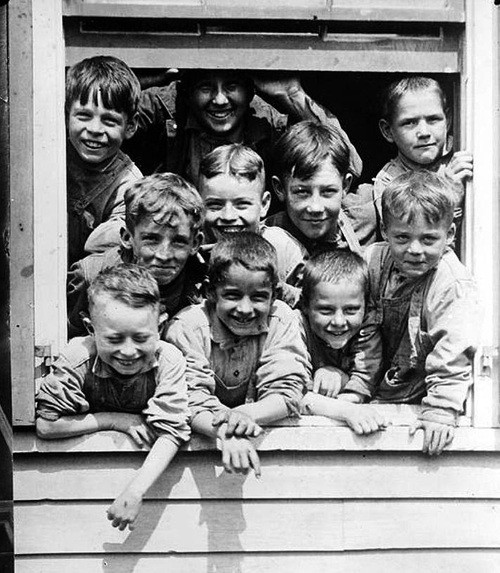
All along the timeline of history we read the sorrowful chapters of the mistreatment of children. From the Greco-Roman practices of abortion, infanticide, and leaving newborn babies outside city walls to die, to the labor and sexual abuses of little ones and teens throughout the ages, to child abandonment by parents and families, the ongoing saga is complex and soul-scarring. America is no exception.
Prior to 1700, among First Peoples and Colonists, like their neighbors in England and on the Continent of Europe, orphaned children were generally taken in by relatives or neighbors. The first private orphanage in America was opened in 1729 in Natchez, Mississippi, founded by French nuns after a massacre of settlers there. The next was the Charleston Orphan House (1790-1951), in South Carolina, the first public institution of its kind in the nation. Generally, orphanages were rare until the 1830s–1850s, when urbanization and health epidemics (cholera, typhoid, and yellow fever) led to a need for homes for growing numbers of children whose parents had died or could no longer care for them, particularly in the large cities.
For example, in 1850 in New York City alone, the general population rose to 515,000, with half of this number as newly-arrived foreign-born residents. This year, upwards of 30,000 abused, abandoned, and orphaned children lived in the slums and on the streets, known by the policemen as "street rats." The only options available to such children at the time were begging, petty thievery, prostitution, and gang membership, or commitment to jails or work-houses. Their plight was hopeless.
About this time, in October of 1849, a young seminary student in New York City rowed across the East River to preach. Charles Loring Brace (1826-1890) had been charged to speak to terminally ill young women who resided at a charity hospital on Blackwell’s Island, a two-mile strip of land nestled between Manhattan and Queens. Now known as Roosevelt Island, it once housed “undesirables” in institutions, including a "lunatic asylum," two "almshouses" (for folks without any financial resources), a charity hospital with a children’s ward, and a penitentiary. Brace knew many of the women he preached to were dying from venereal diseases contracted after they were driven into prostitution and shunned by society. Weeping as he spoke of Jesus’ love, Brace visited others on the island after his sermon and ministered to them as well.
This visit and others like it deeply affected Brace, inspiring him to dedicate his ministry to helping New York City’s most vulnerable. A Yale and Union Theological Seminary graduate, he left his parish ministry at Five Points Mission, aware of the impoverished lives of children all around him, and concentrated his life toward improving their living conditions and futures. In 1853, Brace established the Children's Aid Society, backed by several prominent Christian businessmen. He was twenty-seven years old.
The next year, the Society opened the first of its "newsboys' lodging-houses," providing basic room and board to homeless children who hawked newspapers on the streets. Other children lived in "Misery Row," a crime and poverty-ridden area around Tenth Avenue that was seen as a "fever nest," where diseases spread easily. Brace believed that children needed more than institutions that merely fed the poor and provided handouts. He believed the best way to deal with crime and poverty was to prevent it.
Brace focused on finding jobs and training for destitute children so they could help themselves. His initial efforts in social reform included free kindergartens, free dental clinics, job placement, training programs, reading rooms, and lodging houses for boys.
Brace believed that moving homeless children from their street environments and overcrowded city institutions and placing them with "morally upright" farm families was key to providing the children with good lives. He wrote that having strong Christian families was the answer to all ills related to children. His view was that work, education, and a strong family life could help them develop into self-reliant citizens.
Realizing also the practical need for workers in the developing Western and Midwestern states, he proposed sending homeless children to those communities to provide the older ones with work and all of them with families to care for them. "In every American community, especially in a western one, there are many spare places at the table of life," Brace wrote. "They have enough for themselves and the stranger too."
After a year spent testing his idea by dispatching children individually to farms in nearby Connecticut, Pennsylvania and rural New York, the Children's Aid Society launched its first large-scale expedition to the Midwest in September of 1854. The arrangements for placing homeless children varied. Some children were "pre-ordered" by couples who would send a request for their desired child to one of the institutions participating in the placements. After a suitably-fitting child was found, the child was sent via train to their new family for adoption.
More commonly, groups of 5-30 children of various ages, from infants to teenagers, would travel with an adult agent escort along a pre-scheduled route of towns and communities to be placed in foster home situations. Railroads and charities would provide discount fares, new clothes, Bibles, and other items for the children's journeys, and Brace raised money for the program through his writings and speeches. The Orphan Train Movement had begun.
Brace's plan largely depended upon the goodwill of the foster communities. It was considered more beneficial and good for the homeless children to secure a source of food and shelter in the countryside with families, than to leave them living homeless on city streets. As part of his placement programs, an estimated 200,000 American children traveled west by rail in search of new homes during the time-span of the Orphan Trains (1854-1929). Overall, Brace's relocation program was largely deemed successful. A 1910 survey concluded that 87 percent of the children sent to country homes had "done well," while 8 percent had returned to New York, and the other 5 percent had either died, disappeared or had been arrested.
Over time, child care reform developed further and Orphan Trains gave way to foster villages and family preventive care.
Brace's Children's Aid Society was the first to begin the following ministries to children, all of which are commonplace today: the first industrial schools, the first parent-teacher associations, the first free school lunch programs, the first free dental clinics for children, the first day schools for physically and mentally challenged children, the first kindergarten in the United States, the first foster homes, the first “fresh air” vacations, in which urban children visit host families in the country for the summer, and toy drives for children during the holidays.
Today, the Children's Aid non-profit still serves more than 50,000 children and their families annually, with a budget of more than $100 million, forty-five citywide sites, and 1,200 full-time employees. Children's Aid is one of America's oldest and largest children's nonprofits.
This month we both recognize and sorrow for the children, past and present, who have been victims of injustice, abuse, neglect, and violence. And we also honor those souls, like Charles Brace, whose deep wells of Christ-like compassion, compel them to give their lives in ministry to the least, and most vulnerable, among us.
-Karen O'Dell Bullock
Prior to 1700, among First Peoples and Colonists, like their neighbors in England and on the Continent of Europe, orphaned children were generally taken in by relatives or neighbors. The first private orphanage in America was opened in 1729 in Natchez, Mississippi, founded by French nuns after a massacre of settlers there. The next was the Charleston Orphan House (1790-1951), in South Carolina, the first public institution of its kind in the nation. Generally, orphanages were rare until the 1830s–1850s, when urbanization and health epidemics (cholera, typhoid, and yellow fever) led to a need for homes for growing numbers of children whose parents had died or could no longer care for them, particularly in the large cities.
For example, in 1850 in New York City alone, the general population rose to 515,000, with half of this number as newly-arrived foreign-born residents. This year, upwards of 30,000 abused, abandoned, and orphaned children lived in the slums and on the streets, known by the policemen as "street rats." The only options available to such children at the time were begging, petty thievery, prostitution, and gang membership, or commitment to jails or work-houses. Their plight was hopeless.
About this time, in October of 1849, a young seminary student in New York City rowed across the East River to preach. Charles Loring Brace (1826-1890) had been charged to speak to terminally ill young women who resided at a charity hospital on Blackwell’s Island, a two-mile strip of land nestled between Manhattan and Queens. Now known as Roosevelt Island, it once housed “undesirables” in institutions, including a "lunatic asylum," two "almshouses" (for folks without any financial resources), a charity hospital with a children’s ward, and a penitentiary. Brace knew many of the women he preached to were dying from venereal diseases contracted after they were driven into prostitution and shunned by society. Weeping as he spoke of Jesus’ love, Brace visited others on the island after his sermon and ministered to them as well.
This visit and others like it deeply affected Brace, inspiring him to dedicate his ministry to helping New York City’s most vulnerable. A Yale and Union Theological Seminary graduate, he left his parish ministry at Five Points Mission, aware of the impoverished lives of children all around him, and concentrated his life toward improving their living conditions and futures. In 1853, Brace established the Children's Aid Society, backed by several prominent Christian businessmen. He was twenty-seven years old.
The next year, the Society opened the first of its "newsboys' lodging-houses," providing basic room and board to homeless children who hawked newspapers on the streets. Other children lived in "Misery Row," a crime and poverty-ridden area around Tenth Avenue that was seen as a "fever nest," where diseases spread easily. Brace believed that children needed more than institutions that merely fed the poor and provided handouts. He believed the best way to deal with crime and poverty was to prevent it.
Brace focused on finding jobs and training for destitute children so they could help themselves. His initial efforts in social reform included free kindergartens, free dental clinics, job placement, training programs, reading rooms, and lodging houses for boys.
Brace believed that moving homeless children from their street environments and overcrowded city institutions and placing them with "morally upright" farm families was key to providing the children with good lives. He wrote that having strong Christian families was the answer to all ills related to children. His view was that work, education, and a strong family life could help them develop into self-reliant citizens.
Realizing also the practical need for workers in the developing Western and Midwestern states, he proposed sending homeless children to those communities to provide the older ones with work and all of them with families to care for them. "In every American community, especially in a western one, there are many spare places at the table of life," Brace wrote. "They have enough for themselves and the stranger too."
After a year spent testing his idea by dispatching children individually to farms in nearby Connecticut, Pennsylvania and rural New York, the Children's Aid Society launched its first large-scale expedition to the Midwest in September of 1854. The arrangements for placing homeless children varied. Some children were "pre-ordered" by couples who would send a request for their desired child to one of the institutions participating in the placements. After a suitably-fitting child was found, the child was sent via train to their new family for adoption.
More commonly, groups of 5-30 children of various ages, from infants to teenagers, would travel with an adult agent escort along a pre-scheduled route of towns and communities to be placed in foster home situations. Railroads and charities would provide discount fares, new clothes, Bibles, and other items for the children's journeys, and Brace raised money for the program through his writings and speeches. The Orphan Train Movement had begun.
Brace's plan largely depended upon the goodwill of the foster communities. It was considered more beneficial and good for the homeless children to secure a source of food and shelter in the countryside with families, than to leave them living homeless on city streets. As part of his placement programs, an estimated 200,000 American children traveled west by rail in search of new homes during the time-span of the Orphan Trains (1854-1929). Overall, Brace's relocation program was largely deemed successful. A 1910 survey concluded that 87 percent of the children sent to country homes had "done well," while 8 percent had returned to New York, and the other 5 percent had either died, disappeared or had been arrested.
Over time, child care reform developed further and Orphan Trains gave way to foster villages and family preventive care.
Brace's Children's Aid Society was the first to begin the following ministries to children, all of which are commonplace today: the first industrial schools, the first parent-teacher associations, the first free school lunch programs, the first free dental clinics for children, the first day schools for physically and mentally challenged children, the first kindergarten in the United States, the first foster homes, the first “fresh air” vacations, in which urban children visit host families in the country for the summer, and toy drives for children during the holidays.
Today, the Children's Aid non-profit still serves more than 50,000 children and their families annually, with a budget of more than $100 million, forty-five citywide sites, and 1,200 full-time employees. Children's Aid is one of America's oldest and largest children's nonprofits.
This month we both recognize and sorrow for the children, past and present, who have been victims of injustice, abuse, neglect, and violence. And we also honor those souls, like Charles Brace, whose deep wells of Christ-like compassion, compel them to give their lives in ministry to the least, and most vulnerable, among us.
-Karen O'Dell Bullock
Posted in PeaceWeavers