Suffering Saints
Suffering Saints
[Originally published March 27, 2026]
Suffering. What a stark and somber word. In Cost of Discipleship we read Dietrich Bonhoeffer's profound statement: "When Christ calls a man, He bids him come and die." This beloved German Christian pastor literally gave his life in faithfulness to the gospel and the way of Jesus. At dawn, on 9 April 1945, at Flossenbürg Concentration Camp, he was stripped, dragged to the execution yard, and hanged. He and many others in history, and many still across the world today, have paid the ultimate price for following Jesus. This is what happened to most of the apostles and early church leaders too, as both historical records and strong traditions reveal.
James, elder brother of John, son of Zebedee, was the first of the twelve to be martyred, killed with a sword by Herod Agrippa I in the year 44 (Acts 12:1-2). James the Younger, son of Alphaeus, was thrown from a pinnacle of the temple in Jerusalem for refusing to deny Christ in 62. Eyewitness accounts report that, because he survived the fall, he was then stoned and killed by a blow to the head. He was buried there beside the Temple.
Simon Peter was crucified upside-down in Rome around 64-65, and Thaddeus (also called Jude, son of James) and Simon the Zealot were recorded as having traveled, preached, and been killed together in 66, although reported locations range from Persia (Iran), to Syria, to Armenia. Matthew (Levi) was killed about 68-70 by the sword in Eduba, Ethiopia, on the orders of King Eglypus (or Hirtacus), where he had gone to preach the Good News. Andrew was killed around 70, tied to an X-shaped cross in Patras, Greece on the orders of Aegeas, the Roman governor, after converting his wife to Christianity.
Thomas Didymus (the twin), took the Gospel to India, as far south as modern-day Chennai on the Malabar Coast, and was speared to death in 72, also while preaching. Philip was crucified in Hieropolis (near modern-day Denizli, Turkey), along with Bartholomew (called Nathanael), in about 80 (Phillip's tomb was discovered in 2011). Finally, John, younger brother to James the Elder and son of Zebedee, Jesus's beloved friend, died peacefully of old age in Ephesus near the end of the first century, around 90 AD, after he was released from Patmos, where he had been exiled for his faith.
These disciples and Bonhoeffer in one sense experienced the reality of what Jesus had said. "Then he called the crowd to him along with his disciples and said: ‘Whoever wants to be my disciple must deny themselves and take up their cross and follow me. For whoever wants to save their life will lose it, but whoever loses their life for me and for the gospel will save it. What good is it for someone to gain the whole world, yet forfeit their soul?'" (Mark 8:34-36).
It is true that the call to take up His cross is a call to die. However, Jesus was not just talking about physical death, as in martyrdom, although some are called to die that way. Jesus was also saying that death and resurrection are not only the means of our salvation, but the pattern of our discipleship. In God’s upside-down Kingdom, we die to live, just as we lose to gain, or serve to lead, or humble ourselves to be great. In Galatians, Paul shows how this dying to self actually works in practice. The Spirit is constantly reforming our new lives in God’s new world. He explains that, in the Kingdom, our new lives are now characterized by love, humility and service (Gal.5:13-15).
History has proven, across these almost 2,000 years, that our community life in Christ, our churches, grow stronger when every member dies to self daily and suffers with Christ. We learn each day to be self-emptying, self-giving, self-sacrificing, sustained by and reflecting His love, which governs all. We simply follow the way of Jesus.
It is easier to empty self, to give, to sacrifice - to die daily - if we are confident in resurrection hope. True believers never underestimate the power of seed that falls to the ground and dies (John 12:24-25). We trust that lives laid down in love always bear more fruit than we know. And in such suffering, even as we continue to hope, we learn to embrace the value of daily affliction.
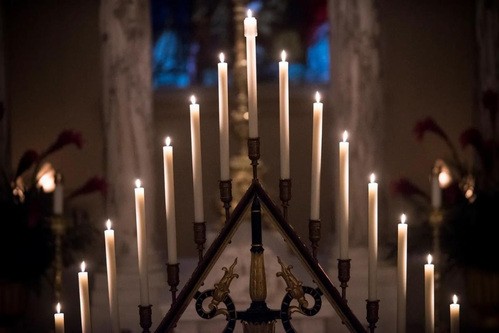
Since the earliest days of the Church, Christians have taken time during the days immediately preceding Easter to worship in a special way. What has come to be called "Tenebrae" is a traditional Holy Week service that uses the gradual extinguishing of light to draw attention to the sufferings of Christ and the resident darkness of the world. Tenebrae means "darkness," or "shadow," and has been found to be a cherished expression of this significant aspect of living the Christ-life. When we attend a Tenebrae service, we are intentionally creating space in which to meditate on and lament the brokenness of the human heart and the groaning of creation.
In this week, in the darkness before the dawn, before the Hope of Resurrection is celebrated again, we pause to be silent, to sit in the shadows, to reflect, and mourn, and grieve the sufferings of Christ, the world, and those who experience anguish daily. It helps us to come to terms with darkness in human history, and to find beauty, even when it seems sometimes that hope itself is being extinguished. Today we remember and hold close those who have suffered, and still suffer, across our world. We pray over them, and all of us, the Peace and Hope of the Risen Christ, the Light of the world, and eternal Conqueror over death.
-Karen O'Dell Bullock
James, elder brother of John, son of Zebedee, was the first of the twelve to be martyred, killed with a sword by Herod Agrippa I in the year 44 (Acts 12:1-2). James the Younger, son of Alphaeus, was thrown from a pinnacle of the temple in Jerusalem for refusing to deny Christ in 62. Eyewitness accounts report that, because he survived the fall, he was then stoned and killed by a blow to the head. He was buried there beside the Temple.
Simon Peter was crucified upside-down in Rome around 64-65, and Thaddeus (also called Jude, son of James) and Simon the Zealot were recorded as having traveled, preached, and been killed together in 66, although reported locations range from Persia (Iran), to Syria, to Armenia. Matthew (Levi) was killed about 68-70 by the sword in Eduba, Ethiopia, on the orders of King Eglypus (or Hirtacus), where he had gone to preach the Good News. Andrew was killed around 70, tied to an X-shaped cross in Patras, Greece on the orders of Aegeas, the Roman governor, after converting his wife to Christianity.
Thomas Didymus (the twin), took the Gospel to India, as far south as modern-day Chennai on the Malabar Coast, and was speared to death in 72, also while preaching. Philip was crucified in Hieropolis (near modern-day Denizli, Turkey), along with Bartholomew (called Nathanael), in about 80 (Phillip's tomb was discovered in 2011). Finally, John, younger brother to James the Elder and son of Zebedee, Jesus's beloved friend, died peacefully of old age in Ephesus near the end of the first century, around 90 AD, after he was released from Patmos, where he had been exiled for his faith.
These disciples and Bonhoeffer in one sense experienced the reality of what Jesus had said. "Then he called the crowd to him along with his disciples and said: ‘Whoever wants to be my disciple must deny themselves and take up their cross and follow me. For whoever wants to save their life will lose it, but whoever loses their life for me and for the gospel will save it. What good is it for someone to gain the whole world, yet forfeit their soul?'" (Mark 8:34-36).
It is true that the call to take up His cross is a call to die. However, Jesus was not just talking about physical death, as in martyrdom, although some are called to die that way. Jesus was also saying that death and resurrection are not only the means of our salvation, but the pattern of our discipleship. In God’s upside-down Kingdom, we die to live, just as we lose to gain, or serve to lead, or humble ourselves to be great. In Galatians, Paul shows how this dying to self actually works in practice. The Spirit is constantly reforming our new lives in God’s new world. He explains that, in the Kingdom, our new lives are now characterized by love, humility and service (Gal.5:13-15).
History has proven, across these almost 2,000 years, that our community life in Christ, our churches, grow stronger when every member dies to self daily and suffers with Christ. We learn each day to be self-emptying, self-giving, self-sacrificing, sustained by and reflecting His love, which governs all. We simply follow the way of Jesus.
It is easier to empty self, to give, to sacrifice - to die daily - if we are confident in resurrection hope. True believers never underestimate the power of seed that falls to the ground and dies (John 12:24-25). We trust that lives laid down in love always bear more fruit than we know. And in such suffering, even as we continue to hope, we learn to embrace the value of daily affliction.
Since the earliest days of the Church, Christians have taken time during the days immediately preceding Easter to worship in a special way. What has come to be called "Tenebrae" is a traditional Holy Week service that uses the gradual extinguishing of light to draw attention to the sufferings of Christ and the resident darkness of the world. Tenebrae means "darkness," or "shadow," and has been found to be a cherished expression of this significant aspect of living the Christ-life. When we attend a Tenebrae service, we are intentionally creating space in which to meditate on and lament the brokenness of the human heart and the groaning of creation.
In this week, in the darkness before the dawn, before the Hope of Resurrection is celebrated again, we pause to be silent, to sit in the shadows, to reflect, and mourn, and grieve the sufferings of Christ, the world, and those who experience anguish daily. It helps us to come to terms with darkness in human history, and to find beauty, even when it seems sometimes that hope itself is being extinguished. Today we remember and hold close those who have suffered, and still suffer, across our world. We pray over them, and all of us, the Peace and Hope of the Risen Christ, the Light of the world, and eternal Conqueror over death.
-Karen O'Dell Bullock
Posted in PeaceWeavers