Suffering that Offers Hope in Christ
Suffering that Offers Hope in Christ
[Originally published March 27, 2026]
"For to this you have been called, because Christ also suffered for you, leaving you an example, so that you might follow in his steps."
1 Peter 2:21, ESV
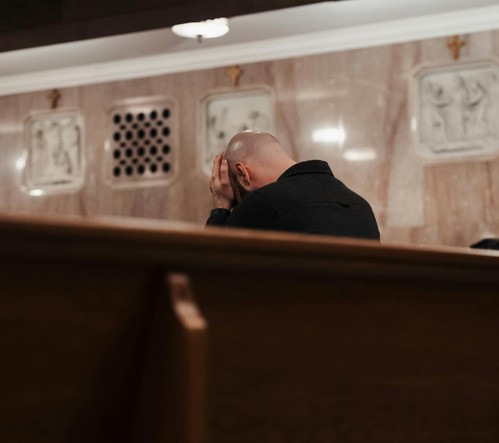
Following in Christ's Steps
"If you are not suffering now, you will someday" are words that cause me trepidation, because the man who wrote them, Paul David Tripp, lived what I would call a life without photo-shopping. There was no need to edit the flawless image that his life and ministry represented, as many often do on social media posts. He had the perfect family, ministry, and health until the day the latter crumbled, and he collapsed beneath the weight of his own finitude. His boundless energy and a body that functioned properly without medical assistance were replaced with endless pain and suffering. His plight fittingly led him to write a book entitled Suffering. He concludes that volume by sharing that identifying with Christ's sufferings enables one to find blessing and to be a blessing to others.
Can there actually be some benefit and witness to Christ when we suffer? Assuredly, just as evil and suffering exist, they possess and add value to our lives in this Easter season. The great problem of evil and suffering, known as "theodicy," may be summed up in a classic question: How can it be that God is all good and all powerful, yet allow for the existence of evil and suffering?
Can there actually be some benefit and witness to Christ when we suffer? Assuredly, just as evil and suffering exist, they possess and add value to our lives in this Easter season. The great problem of evil and suffering, known as "theodicy," may be summed up in a classic question: How can it be that God is all good and all powerful, yet allow for the existence of evil and suffering?
Theological truths about evil and suffering
God is powerfully present in our suffering. One of the three pillars that support a Christian understanding of evil and suffering in the world is God's unsurpassed power. Our suffering does not mean that God He has somehow failed or abandoned us. Indeed, God is actively present in our suffering, building a context for our comfort and spiritual growth. We must keep in mind that knowledge of God's power must never lead us to look away from pain or pretend that suffering has no power to demoralize us. [1]
God is good and unparalleled in His goodness. St. Augustine does not deny the existence of evil, but reminds us that God would not have permitted it to exist unless He could draw good out of it! [2] The happy result of Adam's fall into sin--and subsequently that of all humankind--is God's far greater good, His great redemption in Jesus Christ. The grievous failure of the first creation opened the way for God's extraordinary goodness to shine forth in His grace. Tripp writes, " The theology of suffering in Scripture is never, ever an end in itself, but is designed as a means to an end of real comfort, real direction, real protection, real conviction, and real hope." [3]
Human evil deeds emerge from the exercise of our God-given free agency (Genesis 3:1-19; Romans 5:12-21). We must not slip into the false belief, however, that God is unable to overcome evil in humans or creation (cf. John 5:14; 8:11; cf. also Luke 13:1-5)! Then, why does God allow the suffering of Christian leaders, like Paul Tripp and you!? There a a number of motifs throughout Scripture that provide insight into the causes of evil, but the why of evil and suffering often remains a mystery (cf. Luke 13:1-5). The quintessential suffering man, Job of the Old Testament, also never received an answer to the "why?" of his suffering (cf. Job 42:1-6).
God is good and unparalleled in His goodness. St. Augustine does not deny the existence of evil, but reminds us that God would not have permitted it to exist unless He could draw good out of it! [2] The happy result of Adam's fall into sin--and subsequently that of all humankind--is God's far greater good, His great redemption in Jesus Christ. The grievous failure of the first creation opened the way for God's extraordinary goodness to shine forth in His grace. Tripp writes, " The theology of suffering in Scripture is never, ever an end in itself, but is designed as a means to an end of real comfort, real direction, real protection, real conviction, and real hope." [3]
Human evil deeds emerge from the exercise of our God-given free agency (Genesis 3:1-19; Romans 5:12-21). We must not slip into the false belief, however, that God is unable to overcome evil in humans or creation (cf. John 5:14; 8:11; cf. also Luke 13:1-5)! Then, why does God allow the suffering of Christian leaders, like Paul Tripp and you!? There a a number of motifs throughout Scripture that provide insight into the causes of evil, but the why of evil and suffering often remains a mystery (cf. Luke 13:1-5). The quintessential suffering man, Job of the Old Testament, also never received an answer to the "why?" of his suffering (cf. Job 42:1-6).
Benefits when you suffer
Even so, suffering may be used by God like a medicine that purges the body of an illness. It also can be a means by which our conscience is awakened, and our moral fiber is strengthened (James 1:2-5). Suffering, in this way, exposes the delusion of our personal freedom and self-sufficiency. Therefore, we must always remember that God is not overwhelmed by evil and suffering, nor powerless to overcome it.
Victory in and through our suffering
Attendance on Easter Sunday rose about twenty-five percent throughout much of my pastoral years. Anyone and everyone attended those services. There were lifelong committed believers, nominal Christians, those who were unsaved, and even those who were antagonistic toward Christ. I know this reality to be the case because folks would tell me that the only reason for their attendance was to please a parent, relative, or friend. Such diversity and similarity in one place! You may wonder how this may be so. Pain and suffering are common denominators in every worship gathering. Regardless, all who attend worship, across the spectrum, will be confronted at some point in their lives with the unfathomable and crippling reality of suffering. Easter Christians, who recognize their calling to witness even in their sufferings, are poised to testify to the power of the resurrection through sharing in Christ's sufferings.
How to give witness to an Easter faith through your suffering
Identify with Christ by rejecting sin and self. Paul writes of "sharing his (Christ's) sufferings" and "becoming like him in his death" (Philippians 3:10). His testimony here parallels the passage in Romans 6:1-11. Like Paul, we participate in what Christ did on the cross when we die to sin. Participation in the sufferings of Christ does not mean that we take on some "redemptive suffering" like Christ did, nor does it mean that we will necessarily suffer and die like Jesus did.
The Apostle meant that he identified with Christ's death whenever he suffered (see, for example, 2 Corinthians 11:23-28). Our situations will likely not be like Paul's, but we all may have the same hope of resurrection power that results from conforming to Jesus' death. [4] We experience this conformity and the resulting resurrection power when we choose death to sin and self daily (see esp. Mark 8:34; cf. Philippians 3:12-16).
Offer our bodies as "living sacrifices." The Christian body is a key place for meeting and serving others, whether it be individually or corporately as the "body of Christ." Obedience to Christ means faithfulness through the trials we face in this world, as well as our obedience to Him in our daily lives. I contend that Paul David Tripp was successful in his strength, which was on full display through his extensive counseling and conference leadership ministry. He is also successful in his weakness and suffering, which the crippling illness has caused. Following Christ will mean that we cannot expect to be excluded from the ills of life! We are to offer Christ the whole of our lives, strengths and weaknesses, come what may.
The Apostle meant that he identified with Christ's death whenever he suffered (see, for example, 2 Corinthians 11:23-28). Our situations will likely not be like Paul's, but we all may have the same hope of resurrection power that results from conforming to Jesus' death. [4] We experience this conformity and the resulting resurrection power when we choose death to sin and self daily (see esp. Mark 8:34; cf. Philippians 3:12-16).
Offer our bodies as "living sacrifices." The Christian body is a key place for meeting and serving others, whether it be individually or corporately as the "body of Christ." Obedience to Christ means faithfulness through the trials we face in this world, as well as our obedience to Him in our daily lives. I contend that Paul David Tripp was successful in his strength, which was on full display through his extensive counseling and conference leadership ministry. He is also successful in his weakness and suffering, which the crippling illness has caused. Following Christ will mean that we cannot expect to be excluded from the ills of life! We are to offer Christ the whole of our lives, strengths and weaknesses, come what may.
Live Daily with an Easter Hope
None of us lead picture-perfect lives, not even on social media! Pain and suffering will assuredly strike at some point and in some way during our pilgrimage here. The sufferings of Christ serve as a practical call for us to endure travail (1 Peter 2:21-25) and stand always as a chief source of confidence and encouragement (1:3). Christ, our example, lays a foundation upon which we are called to build holy lives which, at times, will require us to endure suffering (1 Peter 2:6; 1:13; 4:12-14). So, as Timothy Keller writes, “Christ literally walked in our shoes,” so we may tighten the laces today and carry on, even when we suffer, until He returns.
Larry C. Ashlock
Larry C. Ashlock
Notes:
1. Thomas C. Oden, Pastoral Theology: Essentials of Ministry, 224.
2. Augustine, Library of Christian Classics, vol. 7, 342ff.
3. Paul David Tripp, Suffering: Gospel Hope When Life Doesn't Make Sense (Wheaton, Il: Crossway, 2018), p. 24.
4. Richard R. Melick, Philippians, Colossians, Philemon, vol. 32, The New American Commentary (Nashville: Broadman & Holman Publishers, 1991), 135–137.
1. Thomas C. Oden, Pastoral Theology: Essentials of Ministry, 224.
2. Augustine, Library of Christian Classics, vol. 7, 342ff.
3. Paul David Tripp, Suffering: Gospel Hope When Life Doesn't Make Sense (Wheaton, Il: Crossway, 2018), p. 24.
4. Richard R. Melick, Philippians, Colossians, Philemon, vol. 32, The New American Commentary (Nashville: Broadman & Holman Publishers, 1991), 135–137.
Posted in Pathway Perspectives