"Peace Communities" and Long Term Care
"Peace Communities" and Long Term Care
[Originally published April 30, 2026]
The study of "body and soul care" is a fascinating one. We know much, but not all, about how different cultures and peoples along the human timeline have approached illness and end-of-life issues. The care provided for people with aging, disability, and mental health concerns has run the spectrum from abandonment to long-term comfort and care.
In the case of mental illnesses, specifically and historically, people were most often confined at home, boarded with paid "caretakers," or even abandoned, left to reply upon the limited and often harsh charity of the community. Christians established hospitals early, like the Basiliad, founded by pastor Basil of Caesarea in AD 369 in the city of Cappadocia (modern Turkey), or the one pastor Fabiola built in Rome in 400. But these hospitals, as helpful as they were, did not care for mental illnesses.
In medieval Europe, Christians in monasteries offered refuge and care for those with acute or mental illness. Another example are the residents of Gheel, Belgium, who have taken mentally ill pilgrims into their homes for observation and care since the 13th century. Quakers also helped establish the York Retreat in England and the Friends Hospital in Philadelphia, two pioneering institutions in psychiatric treatment in the 1800s.
Following their lead, a pivotal shift moved the treatment from mere confinement toward a more "moral" treatment of patients and the establishment of dedicated and government-supported asylums. Even then, as these institutions evolved, they often fell short of holistic care. By the mid-20th century, many of these were bleak. It took the peace communities to show modern medicine a better way forward.
In the case of mental illnesses, specifically and historically, people were most often confined at home, boarded with paid "caretakers," or even abandoned, left to reply upon the limited and often harsh charity of the community. Christians established hospitals early, like the Basiliad, founded by pastor Basil of Caesarea in AD 369 in the city of Cappadocia (modern Turkey), or the one pastor Fabiola built in Rome in 400. But these hospitals, as helpful as they were, did not care for mental illnesses.
In medieval Europe, Christians in monasteries offered refuge and care for those with acute or mental illness. Another example are the residents of Gheel, Belgium, who have taken mentally ill pilgrims into their homes for observation and care since the 13th century. Quakers also helped establish the York Retreat in England and the Friends Hospital in Philadelphia, two pioneering institutions in psychiatric treatment in the 1800s.
Following their lead, a pivotal shift moved the treatment from mere confinement toward a more "moral" treatment of patients and the establishment of dedicated and government-supported asylums. Even then, as these institutions evolved, they often fell short of holistic care. By the mid-20th century, many of these were bleak. It took the peace communities to show modern medicine a better way forward.
Mennonites
The Mennonite peace communities have developed a special approach to general health care, as well as mental health and long-term care, across the last five centuries. The Mennonites are one of four main branches of the Anabaptist movement—along with the Hutterites, Amish, and Church of the Brethren. Anabaptists separated from the mainstream Protestant Reformation in 1525, mainly because they rejected infant baptism. They emphasized the authority of the New Testament and, among other tenets, refused to swear oaths, rejected violence, and demanded the separation of church and state. Such views led many Anabaptists to reject military service and embrace Christian pacifism as well. They would serve to heal, but not to kill.
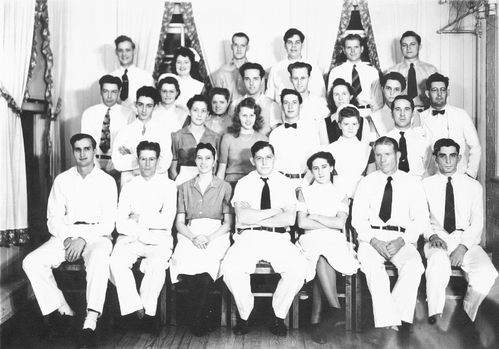
During World War I, conscientious objection, even on religious grounds, often meant imprisonment. However, by World War II, U.S. law made allowance for religious objection to military service, but required Civilian Public Service (CPS) instead. More than 3,000 Mennonites, working without pay, chose to perform their CPS work in mental hospitals. For most of these, often from farms or small towns, with only high school educations, the sights, sounds, and smells of the large public psychiatric hospitals that predominated in 1940s America were a sobering revelation. What they saw were deplorable conditions. Wards were so crowded that the floors could not be seen and patients were often naked and restrained with straps and locks.
No other church group ever had such a concentrated experience with mental illness as the American Mennonites during World War II. The Mennonites in CPS developed a vision of what might be done to help people suffering with mental illnesses and, by the end of the war, began discussing what they had observed and experienced with their home congregations. The Anabaptist tradition already included an ethos of service to people suffering from poverty, conflict, oppression, and disaster, so the CPS men and women followed talk about changing psychiatric care with action.
They began by providing documentation for the exposés of public psychiatric hospitals that led to positive changes in that system, but they did not stop there. The first Mennonite center, Brook Lane, was built on a farm outside Hagerstown in western Maryland, a site that had housed a CPS soil conservation camp. Planning for Brook Lane began in 1946, and the first patients were admitted three years later. Today, there are five Mennonite mental health centers in addition to Brook Lane: Philhaven and Penn Foundation (both in Pennsylvania), King's View (California), Prairie View (Kansas), and Oaklawn (Indiana).
Several themes informed the care practices of these "peace communities." First, compassionate care is central to the culture. The word “care” is expressed in four Pennsylvania Dutch words: (1) serving someone in his presence; (2) watching over and protecting; (3) being aware of needs and acting; and (4) thinking about a person. Giving care is considered both a moral obligation and privilege of belonging, and humbly receiving care is similarly expected. Care is intergenerational and group-focused. Second, social patterns like routine social activities, close neighborhoods, large kinship webs, and long-term relationships, alert an awareness of others’ needs, providing many opportunities to observe how others care and to mimic how to do so best. Third, active participation in health decision-making involves care-seeking and advice-sharing, which strengthens social bonds that reinforce care. Fourth, while health actions vary among individuals, decisions about health care, such as home vs. hospital births, or supplement types of treatments, are linked to a sense of "belonging."
The Mennonite mental health movement sought to create alternatives to the prevailing custodial model. They also chose not to make patient care an evangelistic endeavor. Instead, they established their foundation upon a spirit of Christian concern for patients, whether people of faith or not. They were committed to the people who needed their services, even when circumstances were difficult. Walking away from or dismissing patients was not an option. The difference was infused in the culture of the organization.
Brook Lane invited doctors and nurses and staff to participate who were grounded in compassion, empathy, and collaboration with the community, whether or not they were Mennonite. They also had an openness to try new things and mesh them with accepted therapies. For instance, Philhaven adopted a recovery model before many other institutions did, and also moved to biological treatments early.
Peace community members continue to believe that providing this good medical treatment, aligned with their Christian view of the world, is a way to live out one's faith rather than just talk about it. Grounded in faith, family responsibility, and community care, each member of the community feels a stewardship about the others, and desires to be of help in practical ways.
This balance between faith, home treatment, and modern health care for the mentally ill reflects a uniquely holistic approach to wellness and stands as a benevolent model for other communities of faith to explore and perhaps to replicate. This issue of PeaceWeavers celebrates the noble work of "peace communities," who see, recognize need, and spring into action, modeling deep compassion and healing among the most vulnerable.
-Karen O'Dell Bullock
During World War I, conscientious objection, even on religious grounds, often meant imprisonment. However, by World War II, U.S. law made allowance for religious objection to military service, but required Civilian Public Service (CPS) instead. More than 3,000 Mennonites, working without pay, chose to perform their CPS work in mental hospitals. For most of these, often from farms or small towns, with only high school educations, the sights, sounds, and smells of the large public psychiatric hospitals that predominated in 1940s America were a sobering revelation. What they saw were deplorable conditions. Wards were so crowded that the floors could not be seen and patients were often naked and restrained with straps and locks.
No other church group ever had such a concentrated experience with mental illness as the American Mennonites during World War II. The Mennonites in CPS developed a vision of what might be done to help people suffering with mental illnesses and, by the end of the war, began discussing what they had observed and experienced with their home congregations. The Anabaptist tradition already included an ethos of service to people suffering from poverty, conflict, oppression, and disaster, so the CPS men and women followed talk about changing psychiatric care with action.
They began by providing documentation for the exposés of public psychiatric hospitals that led to positive changes in that system, but they did not stop there. The first Mennonite center, Brook Lane, was built on a farm outside Hagerstown in western Maryland, a site that had housed a CPS soil conservation camp. Planning for Brook Lane began in 1946, and the first patients were admitted three years later. Today, there are five Mennonite mental health centers in addition to Brook Lane: Philhaven and Penn Foundation (both in Pennsylvania), King's View (California), Prairie View (Kansas), and Oaklawn (Indiana).
Several themes informed the care practices of these "peace communities." First, compassionate care is central to the culture. The word “care” is expressed in four Pennsylvania Dutch words: (1) serving someone in his presence; (2) watching over and protecting; (3) being aware of needs and acting; and (4) thinking about a person. Giving care is considered both a moral obligation and privilege of belonging, and humbly receiving care is similarly expected. Care is intergenerational and group-focused. Second, social patterns like routine social activities, close neighborhoods, large kinship webs, and long-term relationships, alert an awareness of others’ needs, providing many opportunities to observe how others care and to mimic how to do so best. Third, active participation in health decision-making involves care-seeking and advice-sharing, which strengthens social bonds that reinforce care. Fourth, while health actions vary among individuals, decisions about health care, such as home vs. hospital births, or supplement types of treatments, are linked to a sense of "belonging."
The Mennonite mental health movement sought to create alternatives to the prevailing custodial model. They also chose not to make patient care an evangelistic endeavor. Instead, they established their foundation upon a spirit of Christian concern for patients, whether people of faith or not. They were committed to the people who needed their services, even when circumstances were difficult. Walking away from or dismissing patients was not an option. The difference was infused in the culture of the organization.
Brook Lane invited doctors and nurses and staff to participate who were grounded in compassion, empathy, and collaboration with the community, whether or not they were Mennonite. They also had an openness to try new things and mesh them with accepted therapies. For instance, Philhaven adopted a recovery model before many other institutions did, and also moved to biological treatments early.
Peace community members continue to believe that providing this good medical treatment, aligned with their Christian view of the world, is a way to live out one's faith rather than just talk about it. Grounded in faith, family responsibility, and community care, each member of the community feels a stewardship about the others, and desires to be of help in practical ways.
This balance between faith, home treatment, and modern health care for the mentally ill reflects a uniquely holistic approach to wellness and stands as a benevolent model for other communities of faith to explore and perhaps to replicate. This issue of PeaceWeavers celebrates the noble work of "peace communities," who see, recognize need, and spring into action, modeling deep compassion and healing among the most vulnerable.
-Karen O'Dell Bullock
Posted in PeaceWeavers