John Muir: Finding God in the Great Outdoors
John Muir: Finding God
in the Great Outdoors
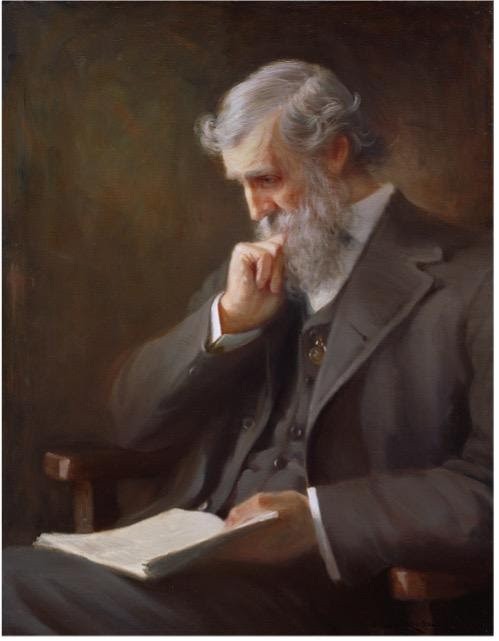
John Muir was born to Daniel and Ann Gilrye Muir in Dunbar, Scotland, on April 21, 1838, the third of eight children. His earliest memories were of taking long walks with his grandfather when he was three. He grew up re-enacting romantic battles from history with boyhood friends, hunting birds' nests to watch chicks hatch, and loving the out-of-doors, where he spent most of his time.
John's family was deeply grounded in Scripture. His father was a Calvinistic preacher, who guided his young son to read and memorize the Bible every day. John could recite the New Testament by heart and almost the entirety of the Old Testament before he turned fifteen. In 1849, when John was just eleven, the Muirs immigrated to America from the East Lothian rugged coastline and cliffs he loved so well. They settled in a lovely acreage in Wisconsin, which they named Fountain Lake Farm. John retained his "Scottish home" memories and lovely brogue the rest of his life, and kept close at hand his little worn copy of Robert Burns' poetry.
As a young man, John's father became a preacher in a new religious group, the "Campbellite" Restoration Movement, later called the Disciples of Christ. John found his heart yearning for the God he also saw reflected in Creation. At twenty-two, he enrolled in the University of Wisconsin-Madison, and paid his own way to study botany, biology, chemistry, and geology. He then spent several years in Canada as a sawmill operator before returning to the United States. Five years later, while working as a shepherd in the Sierra Nevada foothills in California, Muir discovered his true calling—the great outdoors.
For the next 45 years, he explored and wrote passionately about the American natural landscapes he was experiencing. He was able to study plants and animals in an environment he believed "came straight from the hand of God, uncorrupted by civilization and domestication." He described the mountains and wildlife of California, the Cascades of Washington and Oregon, the Arizona desert, and the glaciers of Alaska. He soaked his soul in what he called, the grand “cathedrals” with “every crystal, every flower, a window opening into heaven, a mirror reflecting the Creator.”
Scripture helped him understand the origins of the natural world. He believed God was always active creating life and thereby kept the natural order of the world. Muir saw nature as a great teacher, "revealing the mind of God," and this belief became the central theme of his later journeys and the "subtext" of his nature-writing. With a plant press in his backpack, Muir walked more than 1,000 miles from Kentucky to the Gulf of America, collecting specimens along the way. His curiosity carried him further to California and Alaska, where he studied snowscapes in action. He discovered glaciers in Yosemite and was the first to suggest that ice had shaped its valleys.
Like St. Francis of Assisi, who spoke in familial terms of the birds, the Sun, and the Moon, and like the prophet Isaiah, who saw a world of singing hills and trees joyfully clapping their hands, John Muir discerned “divine lessons” in the natural world and reveled in listening to God’s “water and stone sermons.” For Muir, the interconnections of all things, and our human curiosity about them, stems from a Creator distinct from the universe he has made, echoing the biblical teaching that: “He is before all things, and in him all things hold together” (Colossians 1:17).
Muir’s passion for nature took him to every continent except Antarctica. He lived through incredible adventures—climbing a 100-foot tree during a thunderstorm, inching across a narrow ice bridge in Alaska, and spending a night in a blizzard on Mt. Shasta. Muir transformed his adventures into articles and books that sparked people’s interest in the natural world, championing the revolutionary idea that wild spaces should be preserved for everyone to enjoy.
Muir’s popular writings caught the attention of US President Theodore Roosevelt, who invited him on a camping trip in Yosemite. Leaving behind reporters and Secret Service agents, Roosevelt spent three days with Muir, two park rangers, and an army packer, exploring meadows and waterfalls and discussing conservation around campfires. One night, five inches of snow fell, leaving the president to wake up with snow on his blankets. Inspired by his trip with Muir, Roosevelt set aside more than 230 million acres of public land—an area larger than Texas—that included five national parks and 18 national monuments.
Muir’s advocacy played a critical role in establishing several more national parks, including Sequoia (1890), Mount Rainier (1899), and Grand Canyon (1908). His ideas ultimately led to the creation of the National Park Service in 1916. Thanks to Muir’s vision, there are now over 400 National Park Service sites. Often called "America’s Best Idea," the U.S. system of protecting natural and cultural heritage has inspired other countries to follow suit. Muir also co-founded the Sierra Club, a nonprofit organization dedicated to outdoor recreation and environmental advocacy to protect nature.
This month, we honor those who find and know God in ways most of us never have the opportunity to experience. We are grateful for those who sing the glory of God's artistry and point us to the beauty and interconnectedness of God's Grand Design. He reveals Himself both in His word and in His Creation. Simply indescribable!
-Karen O'Dell Bullock
John's family was deeply grounded in Scripture. His father was a Calvinistic preacher, who guided his young son to read and memorize the Bible every day. John could recite the New Testament by heart and almost the entirety of the Old Testament before he turned fifteen. In 1849, when John was just eleven, the Muirs immigrated to America from the East Lothian rugged coastline and cliffs he loved so well. They settled in a lovely acreage in Wisconsin, which they named Fountain Lake Farm. John retained his "Scottish home" memories and lovely brogue the rest of his life, and kept close at hand his little worn copy of Robert Burns' poetry.
As a young man, John's father became a preacher in a new religious group, the "Campbellite" Restoration Movement, later called the Disciples of Christ. John found his heart yearning for the God he also saw reflected in Creation. At twenty-two, he enrolled in the University of Wisconsin-Madison, and paid his own way to study botany, biology, chemistry, and geology. He then spent several years in Canada as a sawmill operator before returning to the United States. Five years later, while working as a shepherd in the Sierra Nevada foothills in California, Muir discovered his true calling—the great outdoors.
For the next 45 years, he explored and wrote passionately about the American natural landscapes he was experiencing. He was able to study plants and animals in an environment he believed "came straight from the hand of God, uncorrupted by civilization and domestication." He described the mountains and wildlife of California, the Cascades of Washington and Oregon, the Arizona desert, and the glaciers of Alaska. He soaked his soul in what he called, the grand “cathedrals” with “every crystal, every flower, a window opening into heaven, a mirror reflecting the Creator.”
Scripture helped him understand the origins of the natural world. He believed God was always active creating life and thereby kept the natural order of the world. Muir saw nature as a great teacher, "revealing the mind of God," and this belief became the central theme of his later journeys and the "subtext" of his nature-writing. With a plant press in his backpack, Muir walked more than 1,000 miles from Kentucky to the Gulf of America, collecting specimens along the way. His curiosity carried him further to California and Alaska, where he studied snowscapes in action. He discovered glaciers in Yosemite and was the first to suggest that ice had shaped its valleys.
Like St. Francis of Assisi, who spoke in familial terms of the birds, the Sun, and the Moon, and like the prophet Isaiah, who saw a world of singing hills and trees joyfully clapping their hands, John Muir discerned “divine lessons” in the natural world and reveled in listening to God’s “water and stone sermons.” For Muir, the interconnections of all things, and our human curiosity about them, stems from a Creator distinct from the universe he has made, echoing the biblical teaching that: “He is before all things, and in him all things hold together” (Colossians 1:17).
Muir’s passion for nature took him to every continent except Antarctica. He lived through incredible adventures—climbing a 100-foot tree during a thunderstorm, inching across a narrow ice bridge in Alaska, and spending a night in a blizzard on Mt. Shasta. Muir transformed his adventures into articles and books that sparked people’s interest in the natural world, championing the revolutionary idea that wild spaces should be preserved for everyone to enjoy.
Muir’s popular writings caught the attention of US President Theodore Roosevelt, who invited him on a camping trip in Yosemite. Leaving behind reporters and Secret Service agents, Roosevelt spent three days with Muir, two park rangers, and an army packer, exploring meadows and waterfalls and discussing conservation around campfires. One night, five inches of snow fell, leaving the president to wake up with snow on his blankets. Inspired by his trip with Muir, Roosevelt set aside more than 230 million acres of public land—an area larger than Texas—that included five national parks and 18 national monuments.
Muir’s advocacy played a critical role in establishing several more national parks, including Sequoia (1890), Mount Rainier (1899), and Grand Canyon (1908). His ideas ultimately led to the creation of the National Park Service in 1916. Thanks to Muir’s vision, there are now over 400 National Park Service sites. Often called "America’s Best Idea," the U.S. system of protecting natural and cultural heritage has inspired other countries to follow suit. Muir also co-founded the Sierra Club, a nonprofit organization dedicated to outdoor recreation and environmental advocacy to protect nature.
This month, we honor those who find and know God in ways most of us never have the opportunity to experience. We are grateful for those who sing the glory of God's artistry and point us to the beauty and interconnectedness of God's Grand Design. He reveals Himself both in His word and in His Creation. Simply indescribable!
-Karen O'Dell Bullock
Posted in PeaceWeavers