Week of August 2
Becoming a Whole Person
Read: 2 Kings 21; 2 Chronicles 33; John 4
“Jesus answered her, ‘If you knew the gift of God, and who it is that is saying to you, Give me a drink, you would have asked him, and he would have given you living water.’”
John 4:10, ESV
Introduction
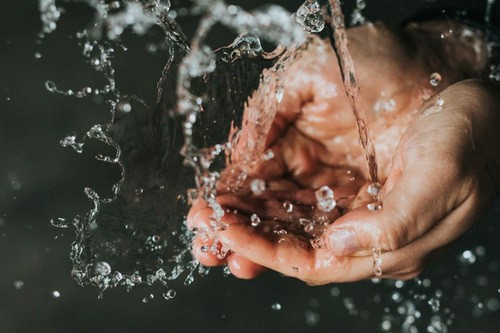
“If a spring has not been opened in a soul, a spring of living water from God’s own Son, no waters can flow and there is no life in you.” G.V. Wigram (1805-1879), wrote the English theologian and an early leader among the Plymouth Brethren. He echoes what Christ had taught: Living water must spring from within the well of one’s own heart or a person will die of spiritual thirst. Let’s examine anew this famous focal passage and listen to the words of our Savior about living water.
Understanding the Bible Passage
Treating people as persons
God-created moral status. All humans, regardless of circumstances or capacity, have moral status (person-hood). We do not think twice about this “at-the-well” meeting in our culture, but John knew that the arrival of this woman at her village’s well created something of a crisis for traditional Jews (4:7-9). They did not mingle with Samaritans (considered “half-breeds”), and devout Jewish men did not speak with women in public. We may all have heard these facts before, but there is something deeper still at work here. Webster defines “person” as “human,” and “individual.” I find it also quite applicable that the dictionary defines the term as “one of the three modes of being in the Trinitarian Godhead as understood by Christians.” Our passage today shows us an encounter between Jesus, the Divine Person, and this individual woman, a human person. Something catalytic must happen when heaven touches earth in this way. Let’s see what takes place!
Intrinsic value of persons. Wells were places where folks gathered in the ancient world. Abraham’s servant met Rebekah (Genesis 24:11, 15-17), Jacob met Rachel (Genesis 29:2-12), and God met Hagar (Genesis 16:7) at wells. One obviously comes to fill water containers at such places, so there is nothing extraordinary in the physical sense when Jesus requests that the woman give Him a drink. However, there is something amazing in the spiritual sense—when the Lord discusses theology with a nameless, faceless woman. He treats her as a person. I’m tempted to hover here, but I hope we see that women have been ignored for centuries and this must never be. God creates male and female in His image. They never lose their God-given value by anything they might do or not do. There is more, because this is an important narrative in John’s good news about Jesus.
Intrinsic value of persons. Wells were places where folks gathered in the ancient world. Abraham’s servant met Rebekah (Genesis 24:11, 15-17), Jacob met Rachel (Genesis 29:2-12), and God met Hagar (Genesis 16:7) at wells. One obviously comes to fill water containers at such places, so there is nothing extraordinary in the physical sense when Jesus requests that the woman give Him a drink. However, there is something amazing in the spiritual sense—when the Lord discusses theology with a nameless, faceless woman. He treats her as a person. I’m tempted to hover here, but I hope we see that women have been ignored for centuries and this must never be. God creates male and female in His image. They never lose their God-given value by anything they might do or not do. There is more, because this is an important narrative in John’s good news about Jesus.
Transformed by Christ
Jesus demonstrates the woman’s value by offering her “living water,” meaning life eternal (4:10). First, she must see who He is, Divine Person, and then request from Him the gift of cleansing for her entire being. John shows us that this “gift” was the “hope-for fulfillment of God’s promises” in this setting (NAC). Jesus was drawing deeply from the Old Testament scriptures at this point and offering her the opportunity for an outpouring of new life (Isaiah 1:16; 55:1-3; Jeremiah 2:13; Zechariah 14:8; cf. John 3:3-6)! There would be no more laboring to find the few drips of the physical to quench her life’s thirst. Instead, Jesus offered her a bubbling spring that would burst forth from within her soul. Jesus offers this sort of life-changing transformation to every person.
Applying the Bible to Your Life
The AIDS epidemic struck in the 1980s and, at that time, to become HIV+ was tantamount to a death sentence. I do not recall the exact moment in time, but men with AIDS diagnoses were referred to me for pastoral support and counsel. Most of these individuals had been rejected by their families and, in large measure, by society. I recall meeting a man in my office who was dying from that disease. We met several more times across the months as he declined in health and a last few times while he was in the hospital. One of my pastoral acts included giving him water through a syringe as he neared the end of this life. That moment stands out in my mind because it helps to picture the way he had lived his life. He had had a precious family, but had fallen prey to some terrible thirsts that both hurt them deeply and ultimately destroyed his life. He was estranged from his family and his Heavenly Father.
God’s presence in the direst circumstances. There was a powerful John 4 moment in the hospital when that man sought and received God’s forgiveness. I cannot help but think today how his focus changed from receiving water in a syringe to quench his physical thirst, to embracing the living water that nourished his soul. That same living water is available to you today in Christ.
God’s presence in the direst circumstances. There was a powerful John 4 moment in the hospital when that man sought and received God’s forgiveness. I cannot help but think today how his focus changed from receiving water in a syringe to quench his physical thirst, to embracing the living water that nourished his soul. That same living water is available to you today in Christ.
Reflection and Action Steps
1. Now, this question may be painful to answer, but what do you thirst for the most? Look at your social calendar and your checkbook register. These two areas will help you to pinpoint just how deeply you thirst for living water. “Bottled?” or “Bubbling?” Choose well!
2. For Families: A fun way illustrate this truth, along with a snack of milk and cookies this first week of August, is to serve your kids a saucer with a cookie on it, and an eye-dropper, along with a small glass of milk.
Explain the story about the woman at the well, how she tried to make herself happy with all kinds of things that were not right. Ask your kids, have they ever tried to do that too? Then share that living like that is kind of like being very thirsty for a long drink of cold milk, but using eye-droppers instead!
Let them try this for several minutes (they might be delighted with it!). If they are really thirsty, the eye-droppers will not work very well. Toward the end of snack time, let them drink deeply from their cup. Jesus wants to bring them joy by the glass-full!
May your paths be straight,
Larry C. Ashlock
2. For Families: A fun way illustrate this truth, along with a snack of milk and cookies this first week of August, is to serve your kids a saucer with a cookie on it, and an eye-dropper, along with a small glass of milk.
Explain the story about the woman at the well, how she tried to make herself happy with all kinds of things that were not right. Ask your kids, have they ever tried to do that too? Then share that living like that is kind of like being very thirsty for a long drink of cold milk, but using eye-droppers instead!
Let them try this for several minutes (they might be delighted with it!). If they are really thirsty, the eye-droppers will not work very well. Toward the end of snack time, let them drink deeply from their cup. Jesus wants to bring them joy by the glass-full!
May your paths be straight,
Larry C. Ashlock
Posted in Pathway Devotionals