Week of August 16
Bringing True Revival into Clear Focus
Read: Jeremiah 7-9; John 13
“Thus says the Lord of hosts, the God of Israel:
Amend your ways and your deeds,
and I will let you dwell in this place."
Jeremiah 7:3, ESV
Introduction
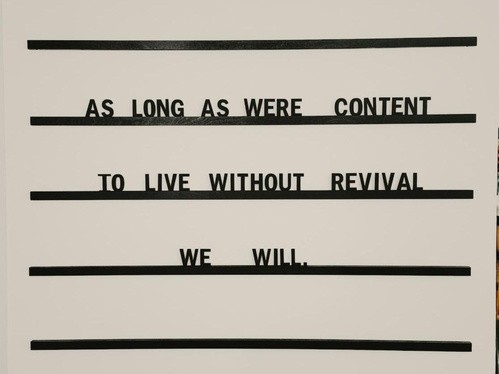
“False Confidence” could be the rubric that Jeremiah might place on the marquees of many contemporary churches. The people in Jeremiah’s day believed they were safe because the Temple, God’s dwelling place, was in their midst (HCBC). Many contemporary congregations hold to a similar belief about their own physical locations and the traditions associated with them. Let’s ask the Lord to open our eyes to see the danger in such attitudes.
Understanding the Bible Passage
Change in context but same message
The first lengthy prose section in the book begins in Chapter 7 (NAC). Scholars tell us that this section indicates a strong Deuteronomic theology, which means that the prophet was drawing deeply upon the Mosaic Law. We may say broadly that he was using the Old Testament, rather than the Temple and its religious system, as the measuring rod for faith and practice. This ethical standard is critical for our understanding of the passage. Jeremiah was using the properly-interpreted scriptures as the plumb-line for evaluating whether Judah’s spiritual house was in good order. The geopolitical circumstances bear resemblance to many eras in Church history—ours as well. Conflicted leadership held the throne, which was buttressed by people who refused to hold it and themselves accountable to the Lord. Let’s dig deeper.
Warning signs that signal trouble
Crises that reveal our finiteness. The people were faced with a grave international crisis. Babylon had overthrown Assyria, and King Josiah had just been killed in battle (609 B.C.). The Egyptians were in military control of the land and had appointed Josiah’s successor—the weak and ineffective leader Jehoiakim. Babylon advanced against Egypt, and the people were grasping for any security they could find. So, they thronged to the Temple (7:2). We can pause here and recall the spikes in church attendance whenever there has been a great national crisis, so Jeremiah has our attention. I remember the rise in worship attendance in the immediate aftermath of “9/11” here in the United States. The World Trade Center twin towers and the Pentagon were struck by commercial airliners that had been commandeered by Al-Qaeda terrorists. Many Americans were faced with deep physical, emotional, and spiritual insecurity, and people turned to churches to make sense of the tragedy and find hope in the aftermath.
God’s word of judgment through His spokesperson. God instructed Jeremiah to stand at the Temple gates and preach as the people entered the doors (7:1). He had called Jeremiah to be His mouthpiece, and Jeremiah had been instructed to speak the exact words that God gave to him. He tells the people of Judah that their only escape from destruction would be sincere repentance. They had been “unjust, violent, and idolatrous.”
Misguided focus. The people concentrated on temple attendance, but not attending to God’s commands. Keep in mind that they were going about business as usual by offering sacrifices and attending worship. I will not belabor the obvious comparison to much of our contemporary worship, where the lowest common denominators for church “success” are numbers of people in the pews and money in the plates. OK, so we have acknowledged that we have not set a very high bar for measuring genuine worship either. What does this passage say that we should do?
God’s word of judgment through His spokesperson. God instructed Jeremiah to stand at the Temple gates and preach as the people entered the doors (7:1). He had called Jeremiah to be His mouthpiece, and Jeremiah had been instructed to speak the exact words that God gave to him. He tells the people of Judah that their only escape from destruction would be sincere repentance. They had been “unjust, violent, and idolatrous.”
Misguided focus. The people concentrated on temple attendance, but not attending to God’s commands. Keep in mind that they were going about business as usual by offering sacrifices and attending worship. I will not belabor the obvious comparison to much of our contemporary worship, where the lowest common denominators for church “success” are numbers of people in the pews and money in the plates. OK, so we have acknowledged that we have not set a very high bar for measuring genuine worship either. What does this passage say that we should do?
The point
God’s people sometimes commit heinous crimes against Him and humanity (7:9), and when they do, they cease pretending to worship Him. Their hearts are far from Him. But they can return. This return to Him will mean worshiping Him wholly by eliminating idolatry and the abuse of the helpless (7:5-7). Sadly, the people in our passage had turned God’s house into a den of robbers (7:11; cf. Matthew 21:13 and Isaiah 56:7). Robbers would hole up in caves in the Judean hills for protection until their pursuers gave up searching for them. Then they would reemerge and commit other crimes. God tells these worshipers they were using the Temple as a refuge, and performing rituals that they thought freed them to continue their wicked practices. We all know that many times church people will hide behind outward worship practices, even while practicing the wickedness of their innermost hearts.
Applying the Bible to Your Life
The recent barrage of church leadership resignations has left most all of us wondering when things will return to normalcy. In recent days, I was pondering the onslaught of moral failings within the body of Christ, and I remembered a prominent church that had been a standard-bearer of Christian uprightness for as long as I can remember. I thought to myself, “Well, I still have __________ Church to look to for consistency.” But then, that church made media headlines within the next few days as a scandal emerged.
Jeremiah has reminded us today to aim much higher when we are looking for the moral summit. Instead of looking around us at others, we should look only to the Lord. He keeps His church pure and enables His people to serve Him with whole hearts. Let’s heed Jeremiah’s word from the Lord today.
Jeremiah has reminded us today to aim much higher when we are looking for the moral summit. Instead of looking around us at others, we should look only to the Lord. He keeps His church pure and enables His people to serve Him with whole hearts. Let’s heed Jeremiah’s word from the Lord today.
Reflection and Action Steps
1. The Lord calls us to first look to the moral state of our own spiritual houses. We must be willing to clean up our own spiritual malpractice before we dare to call others to do the same. Purify your heart before the Lord today.
2. Christ’s church needs to invite Him to transform the “den of robbers” into His sanctuary of saints. We are not sinless, but we can concentrate on living blameless, holy lives. Seek genuine renewal in your own church fellowship.
3. For Families: A simple way to determine that a child needs to go to the doctor is when a fever occurs. When their temperature rises above normal, then parents will begin to take notice, for this is an early warning signal that something inside their bodies is not working properly. An infection cannot be corrected by external action, like sitting next to a fan. Take some time to use a thermometer and have your child(ren) record their temperatures. Of course, I hope that it will register as being normal! Help them to recognize the warning signs of an illness.
Help them also to know that a spiritual infection cannot be resolved by external religious practice, like attending church, or giving an offering. A spiritual infection is called “sin.” God offers them healing for their soul sickness through Jesus Christ. Read Romans 3:23, 6:23, 5:8, and 10:10, and then share with your children the way to have true healing from their sins.
May your paths be straight,
Larry C. Ashlock
2. Christ’s church needs to invite Him to transform the “den of robbers” into His sanctuary of saints. We are not sinless, but we can concentrate on living blameless, holy lives. Seek genuine renewal in your own church fellowship.
3. For Families: A simple way to determine that a child needs to go to the doctor is when a fever occurs. When their temperature rises above normal, then parents will begin to take notice, for this is an early warning signal that something inside their bodies is not working properly. An infection cannot be corrected by external action, like sitting next to a fan. Take some time to use a thermometer and have your child(ren) record their temperatures. Of course, I hope that it will register as being normal! Help them to recognize the warning signs of an illness.
Help them also to know that a spiritual infection cannot be resolved by external religious practice, like attending church, or giving an offering. A spiritual infection is called “sin.” God offers them healing for their soul sickness through Jesus Christ. Read Romans 3:23, 6:23, 5:8, and 10:10, and then share with your children the way to have true healing from their sins.
May your paths be straight,
Larry C. Ashlock
Posted in Pathway Devotionals