Week of May 17
Where to Turn When Help Seems Beyond Your Reach
Read: 1 Kings 1; 1 Chronicles 28; Psalm 91; 1 Thessalonians 5
“For he will command his angels concerning you
to guard you in all your ways.
On their hands they will bear you up,
lest you strike your foot against a stone.”
Psalm 91:11-12, ESV
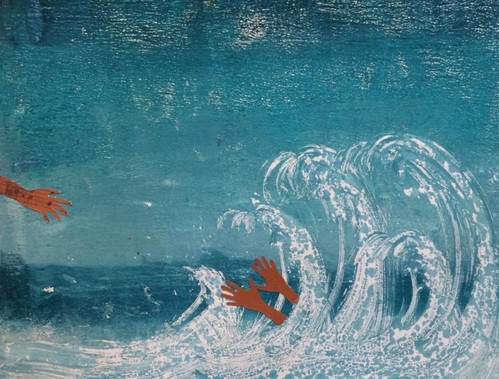
[Photo credit: Sue Carroll on Unsplash]
Introduction
John Newton, the great hymn writer, once said, “If the Lord be with us, we have no cause of fear. His eye is upon us, His arm over us, His ear open to our prayer—His grace sufficient, His promise unchangeable.” The psalmist knew this calming truth about God’s favor when he penned the Psalm 91. Let’s look carefully to see the ways that God cares for us amid severe trials.
Understanding the Bible Passage
How the psalm is organized
Godly wisdom gives us spiritual eyes. The psalm may be divided broadly into two sections: a wisdom psalm (vv. 1-13) and a “divine oracle” (vv. 14-16; EBC). The heart of the psalm’s message rests in his call for the faithful to pursue the path of godliness despite the troubles of life. Wisdom to see through the difficulties of life enables one to know that the Lord “renews his promises to those who love him” (cf. Proverbs 1; Romans 8:28).
Follow God with complete trust. Reading the companion psalms 90 and 92 will help you to interpret this one. Psalm 90 focuses on God’s blessing and favor, while our focal psalm confirms God’s beneficence by His promise and oracle (cf. EBC). The Lord will help us to know better how to praise Him, if we will follow a similar framework in our prayers and praise. We ask God for His protection (vv. 1-2, 9-10), praise Him for the ways that He does protect us (vv. 3-8, 11-13), and give praise to Him for His salvation (vv. 14-16).
Follow God with complete trust. Reading the companion psalms 90 and 92 will help you to interpret this one. Psalm 90 focuses on God’s blessing and favor, while our focal psalm confirms God’s beneficence by His promise and oracle (cf. EBC). The Lord will help us to know better how to praise Him, if we will follow a similar framework in our prayers and praise. We ask God for His protection (vv. 1-2, 9-10), praise Him for the ways that He does protect us (vv. 3-8, 11-13), and give praise to Him for His salvation (vv. 14-16).
How to weather the trials you face
Know and follow God. Verses 11-12 tug at my own heart when I read them devotionally. I recognize immediately that Satan used this passage to tempt Jesus during the temptation encounter (Matthew 4:6)! First, we should know that Psalm 91:11-12 is not a shield that allows us to pursue reckless behavior. Secondly, the tempter will intentionally fail to tell us the entire story when he uses the Bible to lure us away from trusting and obeying the Lord. For example, he conveniently neglects to mention the part of committing our lives to God and His way. Verse 11 grows out of verse 9, “Because you have made the Lord your dwelling place. . .”
Make your relationship with Him your highest priority. We must learn to keep our gaze on the Father and our glance on His benefits. This is a simple analogy, but I noticed that on Mother’s Day last Sunday, the moms in my family were interested in family being together, not the gifts they were given. They value the relationships more than material things. The kinds of relational divine protection are stated here again to “assure God’s care and sufficiency.” There are parallel statements that will help us to recognize the benefit of God being in control: “no harm . . . no disaster” (v. 10), and “he will command his angels . . . to guard you” (v. 11; EBC).
Make choices that honor your commitment to Him. God’s angels will lift the godly out of peril and rescue them (cf. Exodus 19:4; Isaiah 63:9). The roads in Palestine were often treacherous, so the image rang true when the psalmist writes that the Lord commands His angels to keep us from coming to harm on our life’s journey (v. 12b). Willem VanGemeren writes, “In life the Lord may permit many terrible things to happen to his children (cf. Job), as he did to his own Son, our Lord. But his children know that no power is out of God’s control. They trust their heavenly Father, while they act responsibly” (EBC).
Make your relationship with Him your highest priority. We must learn to keep our gaze on the Father and our glance on His benefits. This is a simple analogy, but I noticed that on Mother’s Day last Sunday, the moms in my family were interested in family being together, not the gifts they were given. They value the relationships more than material things. The kinds of relational divine protection are stated here again to “assure God’s care and sufficiency.” There are parallel statements that will help us to recognize the benefit of God being in control: “no harm . . . no disaster” (v. 10), and “he will command his angels . . . to guard you” (v. 11; EBC).
Make choices that honor your commitment to Him. God’s angels will lift the godly out of peril and rescue them (cf. Exodus 19:4; Isaiah 63:9). The roads in Palestine were often treacherous, so the image rang true when the psalmist writes that the Lord commands His angels to keep us from coming to harm on our life’s journey (v. 12b). Willem VanGemeren writes, “In life the Lord may permit many terrible things to happen to his children (cf. Job), as he did to his own Son, our Lord. But his children know that no power is out of God’s control. They trust their heavenly Father, while they act responsibly” (EBC).
Applying the Bible to Your Life
Many of you, like my family, have loved ones that require extra helping hands to perform the daily tasks that come their way. We often are equipped with “waiting hands,” so to speak, to lend our strength in case a “wobble” makes it difficult to walk and remain upright. But here is another reality: falls still occur, despite the highest level of attention! Does this mean that we do not care or there has been some lapse in our abilities to provide support? Certainly not!
Here is the spiritual application for today. I am not blind to the tragedies you face. Furthermore, the enormity of evil that we see in the world does not seem to balance with the promise to protect and deliver. I also know that the fact of Christ’s own hardship and eventual crucifixion, while cognitively understood, is sometimes quite difficult to know how to apply as a soothing balm in painful trials. So, what are we to do when we pass through the “valley of the shadow of death” and are not borne aloft “on angel’s wings” (Psalm 23:4; Exodus 19:4)? The psalmist has taught us to fix our gaze on the Savior because we want Him, our ultimate Benevolence, more than anything this world may promise to give.
Here is the spiritual application for today. I am not blind to the tragedies you face. Furthermore, the enormity of evil that we see in the world does not seem to balance with the promise to protect and deliver. I also know that the fact of Christ’s own hardship and eventual crucifixion, while cognitively understood, is sometimes quite difficult to know how to apply as a soothing balm in painful trials. So, what are we to do when we pass through the “valley of the shadow of death” and are not borne aloft “on angel’s wings” (Psalm 23:4; Exodus 19:4)? The psalmist has taught us to fix our gaze on the Savior because we want Him, our ultimate Benevolence, more than anything this world may promise to give.
“Through many dangers, toils, and snare, I have already come;
‘Tis grace has brought me safe thus far and grace will lead me home.”
‘Tis grace has brought me safe thus far and grace will lead me home.”
-John Newton
Reflection and Action Steps
1. This may take some time today but write down the trials in your life that are requiring you to reach beyond the limits of your ability to comprehend. Then thank God that He is standing by even as you reach toward overcoming the trials.
2. Take time to read aloud God’s oracle of salvation in verses 14-16. Praise God for He has said, “I will be with him/her in trouble.”
3. For Families: There is a marvelous worship song your family may know that grows out of, and echoes, the truth in this passage. Even our youngest children can find God’s reassurance and comfort in its words.
Click to hear and learn this song, and then claim God’s promises and sing to Him when you are struggling. God is faithful to deliver us. Here is the song link: He Will Hold Me Fast
May your paths be straight,
Larry C. Ashlock
2. Take time to read aloud God’s oracle of salvation in verses 14-16. Praise God for He has said, “I will be with him/her in trouble.”
3. For Families: There is a marvelous worship song your family may know that grows out of, and echoes, the truth in this passage. Even our youngest children can find God’s reassurance and comfort in its words.
Click to hear and learn this song, and then claim God’s promises and sing to Him when you are struggling. God is faithful to deliver us. Here is the song link: He Will Hold Me Fast
May your paths be straight,
Larry C. Ashlock
Posted in Pathway Devotionals