Week of June 21
Remedies to Disunity in Your Church Community
Read: 2 Kings 4-5; Psalm 83; 1 Timothy 2
“First of all, then, I urge that supplications, prayers, intercessions, and thanksgivings be made for all people, for kings and all who are in high positions, that we may lead a peaceful and quiet life, godly and dignified in every way.”
1 Timothy 2:1-2, ESV
Introduction
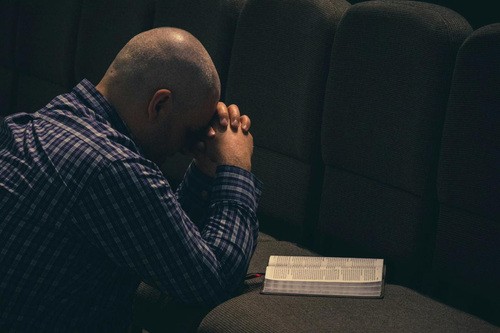
“Call America to Pray Again,” may be the spiritual campaign theme we all need to adopt in this tumultuous era! Of course, it is a deliberate play on words regarding the recent campaign slogan used by the current presidential administration. Everyone who truly knows me will know that this rubric is neither an endorsement of, nor a swipe at, this current administration. I write it because prayer for those who govern, despite their often fickle natures, is what the Apostle Paul instructs believers to do in our focal passage. In this case, “prayer does a body good”— this is, the church, which is Christ’s body.
Understanding the Bible Passage
Important background to the text
Here are some “fast facts” about this letter to Timothy. The date is about 64-67/68 A.D. The site is Ephesus, where there is a source of trouble; quite likely straying leaders (cf. Acts 20:30; 1 Timothy 1:18-20). These false teachers were quite possibly having their best results among younger women who were misled (1 Timothy 5:11-16; 2 Timothy 3:6-7). Paul writes to deal with these false teachers (1:3-11) and offers an outline of how to live as members of God’s family (3:1-15).
A perennial problem
Ponder the issues in Ephesus that we can see in our current church culture today. The bad leaders: loved controversies (1:3-4; undermines unity), denied the future resurrection (2 Timothy 2:17-18; undermines Gospel message), promoted strife (1 Timothy 6:3-5; fosters distrust), and took advantage of gullible church members, in this case, younger women (2 Timothy 3:6-7; robs people of their dignity). They were bitter on the inside and contentious on the outside (cf. 1 Timothy 2:8). Truthfully, there is much of the same discord within our churches and our larger denominational bodies. Nothing will drain the joy out of a fellowship of believers quicker than false teaching and phony lifestyles. Paul’s solution was to exhort all to be Spirit-led instead.
The remedy for fractious influencers in the church
True conversion to Christ. The path to renewal follows the Gospel entirely as it was given to the Apostles by Christ, and put to work by inviting all to come and receive Christ. All who aspire to lead should embody this pattern. Paul provides the church with a framework for making this possible. Perhaps, as some have indeed suggested, chapters 2:1-3:13 represent something of a church manual that was intended to help congregations to organize themselves properly (Handbook).
Sincere worship. Paul specifically instructs the church to worship well by praying for others. This was of utmost importance (2:1a, “first,” as in, “above all”). Then he looks back to the preceding section and directs the focus of believers to a way to put an end to the confusion (2:1, “then”). He has my attention here, because our churches too often resemble a carnival of sights, sounds (numerous and differing appeals), and smells (from the coffee shops and bistros), rather than a gathering of “called out ones” who unite in worship. At the top of Paul’s list is what many of us have no room for (literally and figuratively) in our faith communities—prayer!
United in humble submission to God. Simply, the noisy chatter is silenced when we submit our hearts and minds to God and His will through prayer. We are to pray both specifically, based on a presumed need (supplications), and broadly (general prayers). When our worldview is shaped by God, then “love for our neighbor” takes the forefront in our church communities (John 13:5, 14-15, 34-35). We also should intercede by “speaking on behalf of another” (e.g. spiritual and physical needs of church members). In other words, become serious about the sobering troubles that others are facing. We should eliminate entirely the church lip service that says, “We’ll be praying for you,” but then does nothing to be an answer to that prayer (e.g. James 2:14-17, i.e. the prayerful “Go in peace, be warmed and filled”). Finally, we are to offer prayerful thanksgivings, meaning we are to express gratitude to God for His extraordinary blessings (e.g. forgiveness of sins; 1:12-15).
Sincere worship. Paul specifically instructs the church to worship well by praying for others. This was of utmost importance (2:1a, “first,” as in, “above all”). Then he looks back to the preceding section and directs the focus of believers to a way to put an end to the confusion (2:1, “then”). He has my attention here, because our churches too often resemble a carnival of sights, sounds (numerous and differing appeals), and smells (from the coffee shops and bistros), rather than a gathering of “called out ones” who unite in worship. At the top of Paul’s list is what many of us have no room for (literally and figuratively) in our faith communities—prayer!
United in humble submission to God. Simply, the noisy chatter is silenced when we submit our hearts and minds to God and His will through prayer. We are to pray both specifically, based on a presumed need (supplications), and broadly (general prayers). When our worldview is shaped by God, then “love for our neighbor” takes the forefront in our church communities (John 13:5, 14-15, 34-35). We also should intercede by “speaking on behalf of another” (e.g. spiritual and physical needs of church members). In other words, become serious about the sobering troubles that others are facing. We should eliminate entirely the church lip service that says, “We’ll be praying for you,” but then does nothing to be an answer to that prayer (e.g. James 2:14-17, i.e. the prayerful “Go in peace, be warmed and filled”). Finally, we are to offer prayerful thanksgivings, meaning we are to express gratitude to God for His extraordinary blessings (e.g. forgiveness of sins; 1:12-15).
Applying the Bible to Your Life
There is an ever-growing movement across the nation that seeks to allay homelessness by building tiny houses for those without a roof over their heads. The loss of employment income, lack of education, and poor health are riveted to homelessness and contribute to a vicious cycle of poverty. So, people build affordable, efficient houses and then address the broader needs these folks have for employment, education, and improved health, all within “tiny house communities”!
Let’s use this social parallel to address a spiritual illness within the body of Christ. Too often the lost around us (2:4) cannot “see” the banquet table (Psalm 23; Luke 14:23)—that is, salvation—because we present ourselves as fractured communities (they already live in those!), are insincere about meeting needs (supplies for only a quick meal or one night’s lodging), and offer a message that does not transcend their human plight (cf. false teachers and no resurrection hope). The problem is that there is no real room for these folks inside our “tiny churches” that are filled with people who have “tiny hearts” (lack of genuine, effective prayer; James 2:16b). Trust me, I am not blaming anyone. I, too, stand convicted. Paul challenges us today to see this word from the Lord as a path to blessing others. We begin to clean up our spiritual messiness by returning to the whole Gospel and relying upon the Spirit through sincere prayer.
Let’s use this social parallel to address a spiritual illness within the body of Christ. Too often the lost around us (2:4) cannot “see” the banquet table (Psalm 23; Luke 14:23)—that is, salvation—because we present ourselves as fractured communities (they already live in those!), are insincere about meeting needs (supplies for only a quick meal or one night’s lodging), and offer a message that does not transcend their human plight (cf. false teachers and no resurrection hope). The problem is that there is no real room for these folks inside our “tiny churches” that are filled with people who have “tiny hearts” (lack of genuine, effective prayer; James 2:16b). Trust me, I am not blaming anyone. I, too, stand convicted. Paul challenges us today to see this word from the Lord as a path to blessing others. We begin to clean up our spiritual messiness by returning to the whole Gospel and relying upon the Spirit through sincere prayer.
For Reflection and Action
1. Take time to invite the Spirit to inspect your spiritual house. In what ways may you be contributing to confusion in the body of Christ? What steps—consider the three remedies above—will you take to bring true unity in your church community?
2. For Families: To illustrate the truth of this passage and Paul’s exhortation to be Gospel people who pray for each other and worship Christ wholeheartedly, ask your kids to bring their Legos to the table. Invite them to build the largest and most “fancy” church they can imagine. Give them some time to construct such an intricate building.
Then ask them to build a very simple “tiny house church” right next to it. When they are finished, give your kids some 3 x 5 cards and markers and ask them to write words that describe the way church should be, and the way it should not be. Make your own set of cards while they are working on theirs.
Then get together and go around the churches, examining them in great detail. Notice everything that is the same and different when compared. Then work through your cards. Is the church warm toward visitors and welcoming, or cold? Is it a place where one can meet Jesus, or only a place where people go to be seen? Is it a praying church? Does it help people know Christ? Does it meet the needs of families, men, women, teens, children, babies? As you finish your cards, talk about what makes a Church one that God approves. Share Paul’s list above, and ask whether a small church or a big church can pray and worship and follow Jesus better. The answer, of course, is that both can. If the people are right in their hearts, the church will be unified and “do rightly” in the community.
May your paths be straight,
Larry C. Ashlock
2. For Families: To illustrate the truth of this passage and Paul’s exhortation to be Gospel people who pray for each other and worship Christ wholeheartedly, ask your kids to bring their Legos to the table. Invite them to build the largest and most “fancy” church they can imagine. Give them some time to construct such an intricate building.
Then ask them to build a very simple “tiny house church” right next to it. When they are finished, give your kids some 3 x 5 cards and markers and ask them to write words that describe the way church should be, and the way it should not be. Make your own set of cards while they are working on theirs.
Then get together and go around the churches, examining them in great detail. Notice everything that is the same and different when compared. Then work through your cards. Is the church warm toward visitors and welcoming, or cold? Is it a place where one can meet Jesus, or only a place where people go to be seen? Is it a praying church? Does it help people know Christ? Does it meet the needs of families, men, women, teens, children, babies? As you finish your cards, talk about what makes a Church one that God approves. Share Paul’s list above, and ask whether a small church or a big church can pray and worship and follow Jesus better. The answer, of course, is that both can. If the people are right in their hearts, the church will be unified and “do rightly” in the community.
May your paths be straight,
Larry C. Ashlock
Posted in Pathway Devotionals